MAT3500 - Induction and Recursion Assignment - Part 1
Sept. 29th 2024
17
Min.
Assignment on Induction and Recursion (Part 1 - Induction)
Induction and Recursion - Hoang Anh Duc - HUS - VNU
Work 2.
- (1) Prove the following propositions using mathematical induction
Block
- Base case:
Block
- Inductive step: Assume
- That is:
- We need to prove:
- Which is: (inductive hypothesis)
Block
- So
- By induction,
- (2) Prove the following propositions using mathematical induction
Block
- Base case:
Block
- Inductive step: Assume
- That is:
- We need to prove:
- Which is:
Block
- We have:
Block
- So
- By induction,
- (3) Prove the following propositions using mathematical induction
Block
- Base case:
Block
- Induction step: Assume
- That is:
- We need to prove:
- Which is:
Block
- We have:
Block
- So
- By induction,
Work 3.
- (1) Prove the following propositions
Block
- Base case:
- We have:
- We have:
- Since: , therefore:
- Induction step: Assume
- That is:
- We need to prove:
- Which is:
Block
- Therefore
- By induction,
- (2) Prove the following propositions
Block
- For :
Block
- For :
Block
- For :
Block
- For :
Block
- We found our base case of
- Induction step: Assume
- That is:
- We need to prove:
- Which is:
Block
- Therefore
- By induction,
- Therefore, the smallest value of positive integer for which is
- (3) Prove the following propositions
Block
- Base case:
- We have:
- Therefore:
- Induction step: Assume
- That is:
- We need to prove:
- Which is:
Block
- Therefore
- By induction,
Work 4.
- Prove the following proposition using mathematical induction:
Block
- Base case:
Block
- Therefore:
- Induction step: Assume
Block
- We need to prove:
Block
- Therefore
- By induction,
Work 5.
- Prove the following proposition using mathematical induction:
Block
- Base case:
- We have:
- Therefore:
- Induction step: Assume
- That is:
- We need to prove:
- Which is:
Block
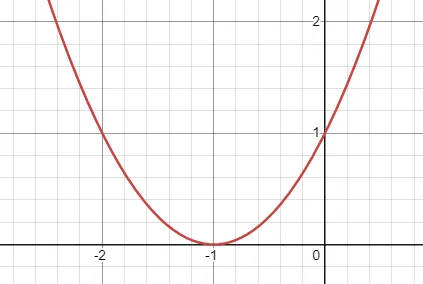
$$ k^2 + 2k + 1 $$
- Therefore
- By induction,
Work 7.
- Prove the following proposition:
Block
- First we define the proposition above as P(n).
- We will use De Morgan’s Laws and Induction:
Block
- Base case:
- By De Morgan’s Law:
- Induction step: Assume
- That is
- We need to prove:
- Which is:
- Consider:
Block
- Therefore
- By induction,
Work 9.
- Prove the followings:
Block
- (a) and (b): Similar to Work 7. using Distributive Laws and Induction.
- (c) is similar to (d), so I will demonstrate with (c).
Block
- First we define the proposition above as P(n).
- Base case: . Proof:
Block
- Induction step: Assume
- That is
- We need to prove:
- Which is:
Block
- Therefore
- By induction,
Work 11.
- Prove the following using mathematical induction:
Block
- This is similar to Work 7.
- is essentially
- are essentially
- We can solve this problem using De Morgan’s Laws and Induction.
Work 13.
- Prove the followings:
Block
Block
Block
Block
Block
Work 17.
- Prove the followings:
Block
- First we define the proposition above as P(n).
- Since (*)
- We need to prove:
- Base case:
- Inductive step: Assume
- We need to prove:
- We have
- By induction,
- Since and
- We conclude
-
References and Extras:
- Work 17. Complement.
- Work 17. Complement.
- Work 9. Complement.
- Mary Radckiffe, Carnegie Mellon University - Induction
- David A. Cox, Catherine C. McGeoch, Amherst College - Logic, Sets, and Proofs
- Kenneth H. Rosen - Discrete Mathematics and Its Applications.